
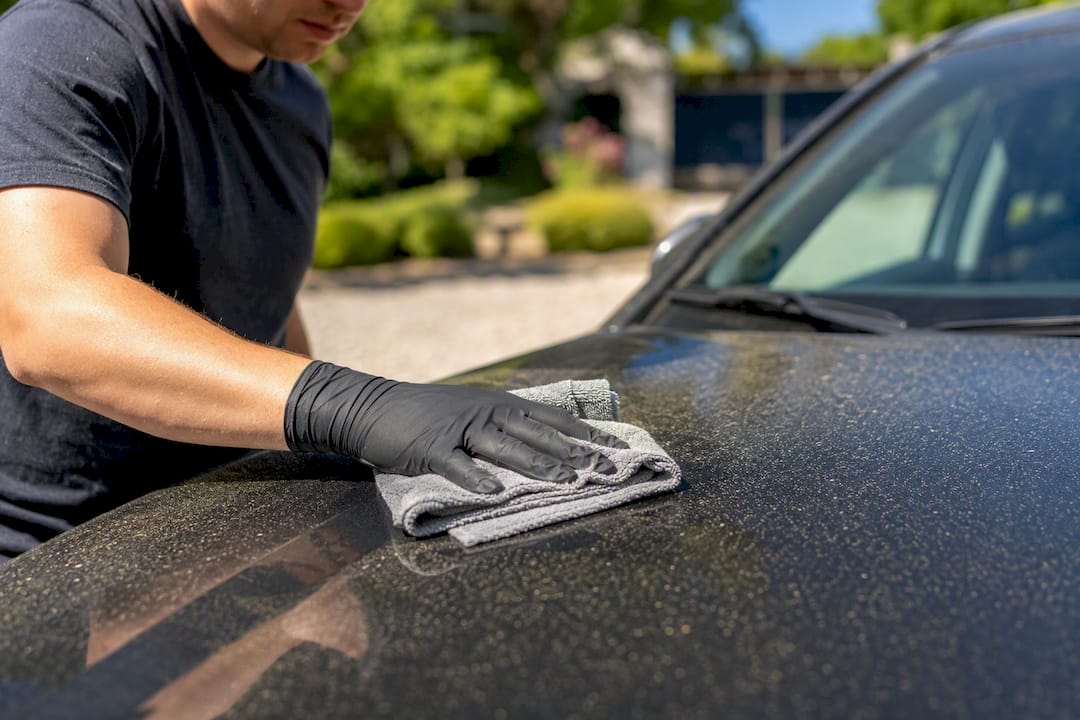
Rinse first, never dry-wipe, then wash with a lubricated, pH-neutral two-bucket method and dry with clean microfiber. That sequence is the whole game for pollen removal car paint work: skip the rinse or grab a dry towel first, and you’re grinding grit into your clear coat instead of lifting it off.
Grab these before you start:
- A hose or pressure washer for the pre-rinse
- Two buckets (one for soap, one for rinsing your mitt)
- pH-neutral car soap, not dish detergent
- A dedicated microfiber wash mitt
- A waffle-weave drying towel or a filtered air blower
If yellow staining or hazy spots remain after the wash dries, stop wiping at it. That’s a sign of bonded residue or early etching, and the fix is different from routine cleaning.
Key Takeaways
Safe pollen removal always starts with a rinse and pH-neutral two-bucket wash, never a dry wipe, because pollen’s abrasive shell and acidic residue can scratch or etch clear coat within hours of contact.
| Point | Details |
|---|---|
| Never dry-wipe | Dry pollen grains have spiked shells that scratch clear coat on contact; rinse before touching the surface. |
| Etching moves fast | Wet pollen can begin etching clear coat within 12 to 72 hours, so don’t let film sit through a rainy week. |
| Wash cadence matters | Rinse two to three times weekly and fully wash every seven to ten days for uncoated cars during peak pollen season. |
| Test before treating stains | Rinse first; if residue remains, use short-contact vinegar solution or a clay bar rather than scrubbing harder. |
| Cdcautodetailing solves recurring pollen damage | Mobile washes handle routine seasonal buildup, while ceramic coating and PPF cut wash frequency and protect high-exposure panels long term. |
Table of Contents
- Does Pollen Damage Car Paint?
- How Do You Safely Remove Pollen From a Car?
- What Are the Best Quick Options Between Full Washes?
- How Do You Remove Baked-In Pollen Stains?
- How Can You Protect Car Paint From Pollen Long Term?
- How Do You Inspect Paint After Removing Pollen?
- Does Washing Pollen Off Your Car Have an Environmental Cost?
- When Does Pollen Damage Call For a Professional?
- Pollen Season Is Easier With The Right Protection In Place
- Sources
Does Pollen Damage Car Paint?
Yes, in two distinct ways, and both move faster than most owners expect. Pollen grains carry a rough, spiked outer shell that behaves like fine sandpaper the moment you drag a dry towel across it, which is why dry wiping is the most common mistake owners make during pollen season. That abrasion shows up as swirl marks, tiny curved scratches you’ll see under direct sunlight but not under shop lights.
The second threat is chemical. Once pollen gets wet, from dew, sprinklers, or a light rain, it can release mildly acidic compounds that begin etching clear coat within 12 to 72 hours, depending on temperature and pollen concentration. Horizontal surfaces take the worst of it: hoods, roofs, trunk lids, and the cowl area near your wipers collect the thickest film because gravity does the work for the pollen. Cabin air filters and wiper blades absorb pollen too, which matters more than most detailing guides admit.
How Do You Safely Remove Pollen From a Car?
Work in this order and you’ll avoid almost every scratch a rushed pollen cleanup causes.
- Rinse first, always. Use a hose or pressure washer held 12 to 18 inches from the surface, focused on hoods, roofs, and trunks where pollen film settles thickest. This step alone removes a large share of loose pollen before anything touches the paint.
- Apply a foam pre-wash if you have one. A foam cannon loaded with a snow-foam soap, left to dwell 3 to 5 minutes, loosens the pollen film chemically before any mechanical contact, cutting the risk of drag marks during the wash.
- Wash with the two-bucket method. Fill one bucket with pH-neutral soap and water, the other with plain rinse water. Dip your mitt, wash one panel top to bottom, then rinse the mitt in the second bucket before it touches soap again. Work roof and hood first since that’s where pollen sits thickest, then move down the body.
- Check for bonded residue with a clay bar, but only if needed. Run a clean palm over a washed, dried panel. If it feels gritty rather than glass smooth, a fine clay bar lubricated with quick detailer spray will lift what soap left behind. Skip this step entirely if the panel already feels smooth.
- Dry immediately with microfiber or a filtered blower. Air drying invites new pollen and water spots; a waffle-weave towel or a blower designed for cars clears water without adding fresh grit.
Pro Tip: Wash top to bottom and never reuse a section of your mitt near wheels or lower rocker panels, those areas carry brake dust and road grime that will scratch paint if it migrates onto your mitt and back up to the hood.
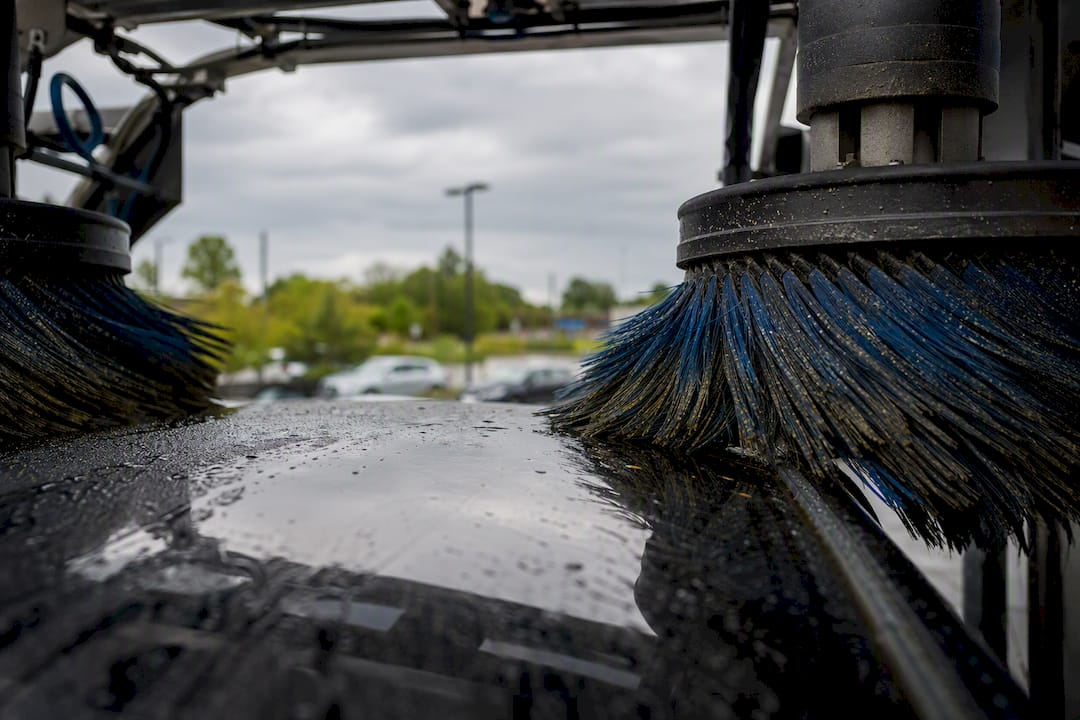
Skip tunnel car washes with spinning brushes during peak pollen weeks. Those brushes hold grit from the last ten cars that went through, and they’ll do more damage in 90 seconds than a season of pollen would on its own.
What Are the Best Quick Options Between Full Washes?
Not every pollen dusting needs a full wash, but the shortcuts have real limits.
- A leaf blower or dedicated car dryer works well on loose, dry pollen. Hold it 8 to 10 inches away at a low angle so you’re pushing pollen off, not grinding it into the clear coat.
- A touchless pressure rinse is a solid stopgap between washes. Keep the nozzle on a wide fan pattern and avoid aiming directly into door seals or trim gaps, where concentrated pressure can force water and debris past the weatherstripping.
- Both options only handle loose, dry pollen. Once it’s wet or has had a day or two to bond, blowing air at it does nothing, and you’re back to a full contact wash.
How Do You Remove Baked-In Pollen Stains?
Test before you treat. Rinse the spot with plain water; if it disappears, you’re dealing with loose pollen and a normal wash handles it. If a dull, yellowish film or faint etching mark stays behind after rinsing, it’s bonded, and you need a different approach.
- A short-contact 50/50 mix of white vinegar and distilled water can dissolve bonded pollen residue when applied briefly and rinsed off within a minute or two. Never let it sit longer than that, and never apply it under direct sun. Vinegar is acidic, and leaving it on defeats the entire purpose of removing pollen’s acidic residue in the first place.
- If the panel still feels gritty after washing, a fine clay bar lubricated with detailer spray lifts the remaining bonded film without a chemical treatment.
- Visible etching, cloudy spots that don’t buff out by hand, or swirl marks from past dry-wiping call for machine polishing. That’s a job for a paint correction specialist, not a weekend project, since over-polishing thins clear coat that doesn’t grow back.
Pro Tip: If you’ve been dry-wiping pollen all spring and now see a web of fine scratches under sunlight, don’t reach for wax to hide it. Wax fills light haze temporarily but does nothing for actual scratch depth, and it’ll wash out in a few weeks, leaving you right back where you started.
How Can You Protect Car Paint From Pollen Long Term?
Wax and sealants add a sacrificial layer, but they’re not equal. Some carnauba waxes actually attract pollen because of how they interact with airborne particulates, while synthetic sealants tend to shed pollen more evenly during rinsing.
Ceramic coatings and paint protection film (PPF) do more heavy lifting for owners who deal with pollen every spring. A cured ceramic coating creates a hydrophobic, chemically resistant surface that lets most pollen rinse away with a hose instead of requiring a full contact wash, which matters if you’re short on weekend time. Ceramic coatings don’t stop pollen from landing on the car, but they buy you time before etching sets in, and PPF adds a sacrificial film layer on hoods and mirrors, the highest-exposure panels, where you’d rather replace a film than repaint a panel.
- During peak pollen weeks, plan on rinses two to three times a week with a full wash roughly every seven to ten days for uncoated cars.
- Coated vehicles can stretch that cadence since the surface sheds pollen faster.
- Garage or carport parking, avoiding spots under pine or oak trees, and swapping your cabin air filter before pollen season starts all cut down on what lands on the car and what you breathe inside it, a point the CDC’s climate and health resources back up for indoor allergen exposure.
For a full pre-season routine, these exterior detailing tips walk through timing your wash and wax before pollen counts spike.
How Do You Inspect Paint After Removing Pollen?
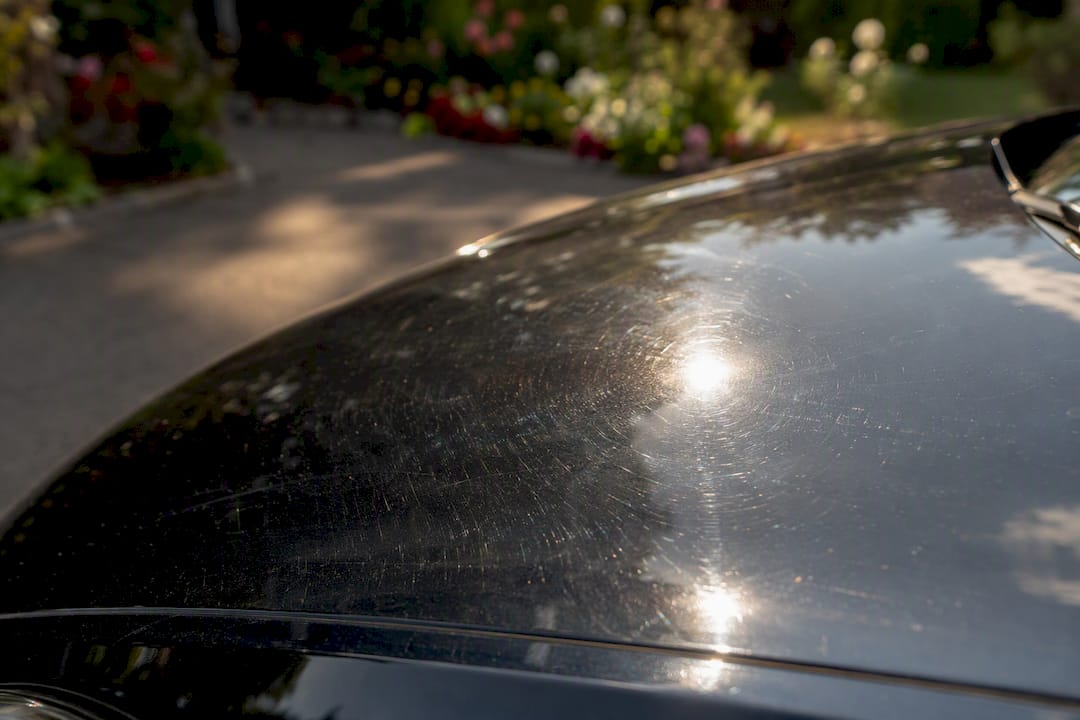
Wait until the car is fully dry, then check it in direct, low-angle sunlight rather than shade or garage lighting. Swirl marks and fine scratches are nearly invisible under flat light but jump out the moment sun hits the panel at an angle.
Run your palm flat across washed panels, especially the hood and roof. Smooth means you’re done. Any grit, roughness, or a slightly tacky feel means residue is still bonded and needs another pass, ideally with a clay bar rather than more scrubbing.
Look closely at high-exposure zones first: the hood, roof, trunk lid, and the cowl panel beneath your wipers. These catch the most pollen and show damage earliest. Check for:
- Fine circular scratches that catch light in a spiderweb pattern (swirl marks from prior dry wiping)
- Dull or cloudy patches that don’t reflect light as sharply as the surrounding paint (early etching)
- Any yellowish tint remaining in clear coat, particularly in recessed body lines or around emblems
If you spot etching that doesn’t buff out with a light hand-polish, resist the urge to keep rubbing at it. Repeated polishing on the same spot removes clear coat thickness you can’t add back, and a spot that needs correction is better handled with proper machine polishing equipment. Photograph problem areas in consistent lighting each week during pollen season. That habit catches developing etching while it’s still shallow enough to correct, rather than months later when it’s a full repaint conversation.
Does Washing Pollen Off Your Car Have an Environmental Cost?
Frequent rinsing adds up in water use, especially if you’re running a hose two or three times a week through peak pollen season. A dedicated pressure washer with an adjustable nozzle uses less water than a fully open garden hose for the same coverage, and it finishes the job faster.
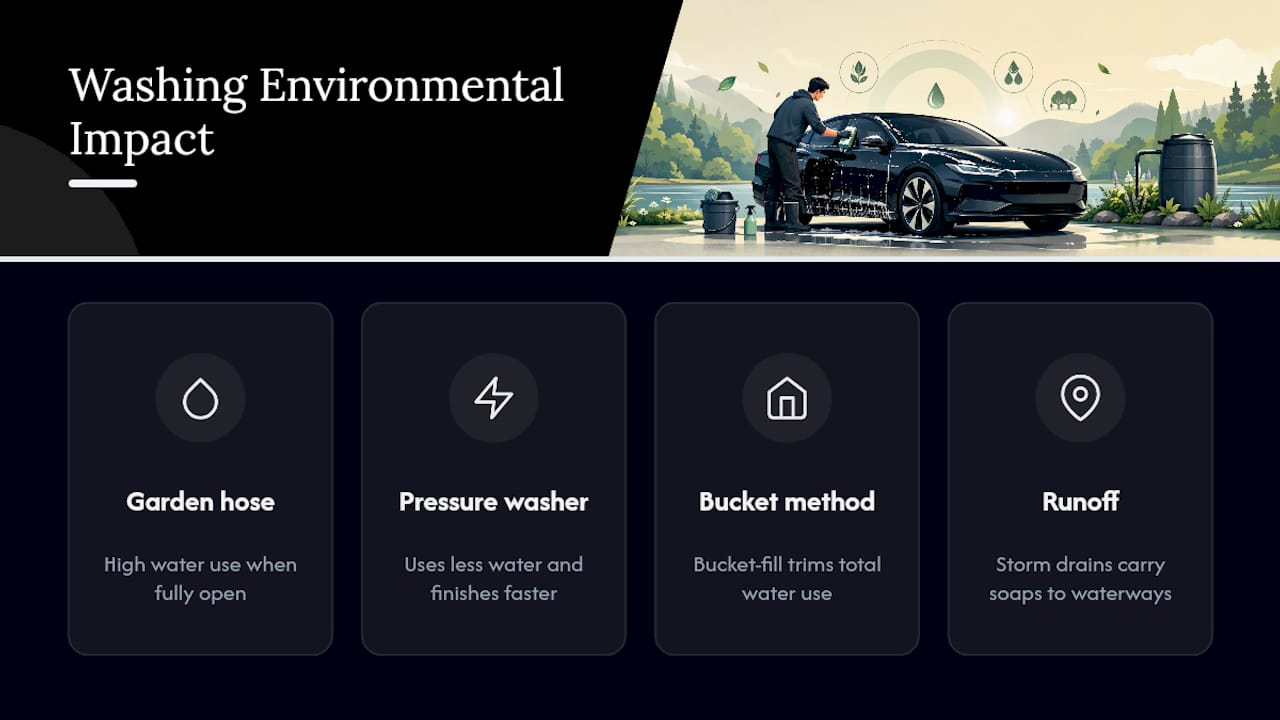
Runoff matters too. Soap, road grime, and dissolved pollen residue washed off a driveway typically flow straight into storm drains rather than a treatment plant, carrying phosphates and surfactants into local waterways. Washing on gravel, grass, or a permeable surface instead of pavement lets some of that runoff filter through soil before it reaches a drain. A biodegradable, pH-neutral soap reduces the chemical load in that runoff regardless of where you wash.
Coated vehicles have a smaller footprint here, almost by accident. Since ceramic-coated cars often need a quick rinse instead of a full contact wash, they use meaningfully less water and less soap across a pollen season than an uncoated car getting scrubbed weekly. That’s a side benefit worth weighing alongside the paint protection itself. If you wash at home regularly, a bucket-fill approach for the two-bucket method, rather than leaving a hose running continuously, also trims total water use without changing the technique.
When Does Pollen Damage Call For a Professional?
Mobile clients across South Jersey tend to hit the same wall each spring: DIY washing handles loose pollen fine, but repeated weeks of exposure leave etching that a hand wash can’t reverse. That’s when Cdcautodetailing typically shifts a client from occasional washes toward a ceramic coating or PPF installation, since prevention beats correction every time on cost and effort.
— Charles
Pollen Season Is Easier With The Right Protection In Place
Cdcautodetailing gives South Jersey owners a way to skip the DIY guesswork entirely, especially once pollen etching has already set in or you’re tired of rewashing every few days during peak weeks. Instead of another weekend spent clay-barring bonded residue, book a mobile detail that comes to your driveway and handles the full pollen-season workflow properly the first time.

For cars already showing swirl marks or dullness from past dry-wiping, our paint protection detailing service corrects the surface before applying protection, rather than sealing damage in. If you’re past the DIY stage and want pollen to stop being a weekly chore, a ceramic coating makes rinsing sufficient for most of the season instead of a full contact wash, and it’s the option we recommend most often for repeat pollen clients. Owners with high-exposure hoods or mirrors sometimes pair that with paint protection film for the panels that take the worst of it. Reach out through our booking page to get a quote for your vehicle before the next pollen wave hits your area.
Sources
- Can Pollen Damage Your Car? – Car Detox
- Removing Pollen Film from Your Car: What Makes It Dangerous — and How
- How Pollen Season Destroys Your Car’s Paint (and How to Fight Back) | EuroLuxe Detailing
- Pollen is Quietly Damaging Your Finish – Drive and Shine