
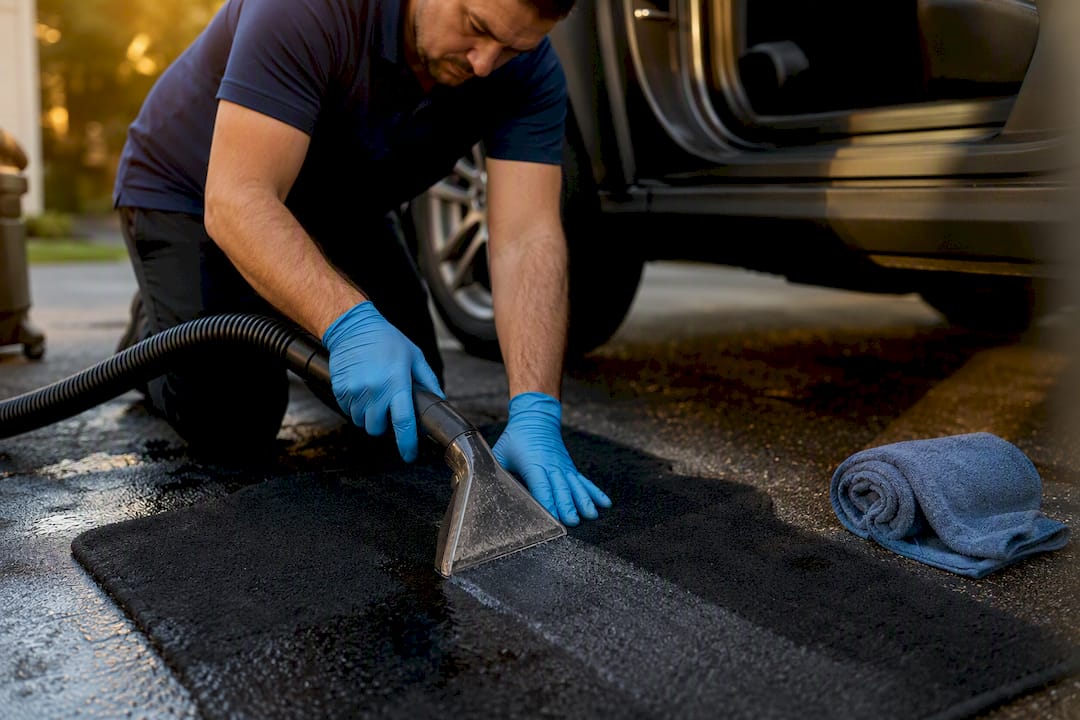
Water extraction with a wet/dry shop vac, followed by forced continuous airflow across the carpet and padding, is the fastest safe way to dry a wet car interior. Skip either step and you’re looking at mold within 24 to 48 hours, according to the EPA’s mold growth timeline. That clock starts the moment water hits the fibers, not when you get around to dealing with it.
Here’s what to do in the next 15 minutes: pull out floor mats and anything loose, run a wet/dry vac over every puddle and soaked section, then get air moving through the cabin with the doors open and a fan aimed inside. Don’t stop at the surface. The IICRC, the trade body that sets drying standards for water damage restoration, treats the carpet padding underneath as the real target. Surface carpet can feel dry quickly while the padding underneath remains soaked for an extended period.
- Remove valuables, mats, and anything electronic sitting in the wet zone.
- Extract standing water with a wet/dry shop vac, working slowly across every section.
- Start a fan or air mover immediately and add a dehumidifier if you’re working in a closed garage.
Pro Tip: If you only own one piece of equipment, make it the wet/dry vac. Airflow speeds up drying, but extraction is what keeps water from ever reaching the padding in the first place.
Call a professional like Cdcautodetailing if you see visible mold, if the interior has sat wet for more than 48 to 72 hours, or if water reached the electronics under the seats or dash.
Key Takeaways
Drying a wet car carpet fast and preventing mold requires extracting standing water first, then running continuous airflow and dehumidification until the padding underneath tests fully dry.
| Point | Details |
|---|---|
| Extract before you dry | Use a water-rated wet/dry shop vac with slow, overlapping passes to pull water out of the padding, not just the surface. |
| Airflow beats heat | Continuous fan or air mover airflow paired with a dehumidifier dries faster and safer than heat alone, which traps moisture instead. |
| Check the padding, not just the carpet | Lift the carpet edge if you feel a squish underfoot; surface-dry carpet can hide trapped moisture underneath. |
| Know your timeline | Light spills dry in hours; moderate saturation takes 24 to 48 hours of active drying; heavy flooding often needs professional equipment. |
| Call a pro at clear thresholds | Visible mold, saturation past 48 to 72 hours, or soaked electronics mean it’s time to book a service like Cdcautodetailing. |
Table of Contents
- Tools and Materials for Wet Car Carpet Drying
- Step-by-Step Extraction and Drying Workflow
- Lifting the Carpet to Dry the Padding Underneath
- How Long Does It Take to Dry a Wet Car Carpet?
- Detecting Mold and Knowing When to Call a Pro
- Safety Checklist Before You Start Drying
- Why Airflow and Dehumidification Beat Heat-Only Drying
- A Local Detailer’s Take on Wet Car Interiors
- Get Professional Help Drying Your Car’s Interior
- Frequently Asked Questions
- Sources
Tools and Materials for Wet Car Carpet Drying
You don’t need a warehouse of gear, but you do need the right pieces. A regular household vacuum is not one of them. Its motor isn’t sealed for liquid, and running it over a puddle will fry it in seconds, or worse, shock you.
Here’s the actual shopping or rental list:
- A water-rated wet/dry shop vac, at least 5 gallons of tank capacity.
- A high-velocity fan or box fan (an actual air mover, if you can rent one, beats a bathroom-style fan by a wide margin).
- A portable dehumidifier, especially if you’re drying the car in a garage instead of outdoors.
- Microfiber towels or other absorbent cloths for the initial sop-up.
- Baking soda for odor control once the carpet is mostly dry.
- Moisture-absorbing bags, the DampRid-style kind, for smaller pockets like footwells and door pockets.
- Basic trim tools and a pair of gloves.
Home improvement stores rent wet/dry vacs by the day, which makes sense if this is a one-time flood rather than a recurring problem. Same goes for air movers. A single rental day usually costs less than replacing a vacuum motor you burned out trying to save money.
Pro Tip: If you can only grab two things right now, get the wet/dry vac and a fan. Extraction and airflow do most of the work; the dehumidifier and baking soda finish the job later.
Step-by-Step Extraction and Drying Workflow
Speed matters here, but so does doing things in the right order. Skipping a step, or rushing the vacuum pass, is the most common reason DIY drying jobs fail and mold shows up a week later.
1. Secure the vehicle and clear the space. Park somewhere with airflow, ideally a garage with the door open or a shaded driveway. Turn off the ignition and disconnect anything charging. Pull the floor mats, any loose gear, and phone chargers out of the wet zone.
2. Sop up standing puddles first. Before you even touch the vacuum, press microfiber towels into any pooled water. This takes the bulk load off your shop vac and saves you time on the extraction pass.
3. Run the wet/dry vac in slow, overlapping passes. This is the step most people rush. Effective extraction means pressing the nozzle firmly against the carpet and working in overlapping strokes, roughly 3 to 4 passes per section, not one quick swipe. Moving too fast pulls surface moisture but leaves the padding underneath still saturated. This step can take a significant amount of time depending on the extent of water present. Empty the recovery tank as it fills so you’re not just recirculating water back onto the carpet.
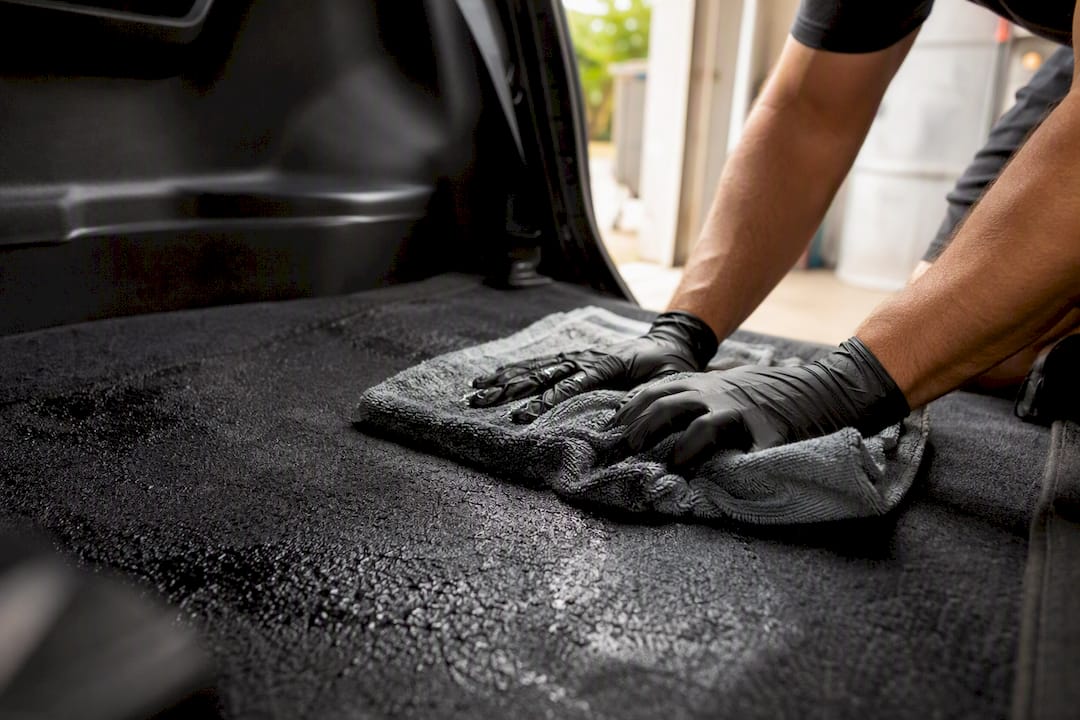
4. Press-dry with towels. Once the vacuum stops pulling up visible water, press dry microfiber towels into the carpet with your body weight to wick out what the vacuum missed. Rotate to a dry towel section as each one saturates.
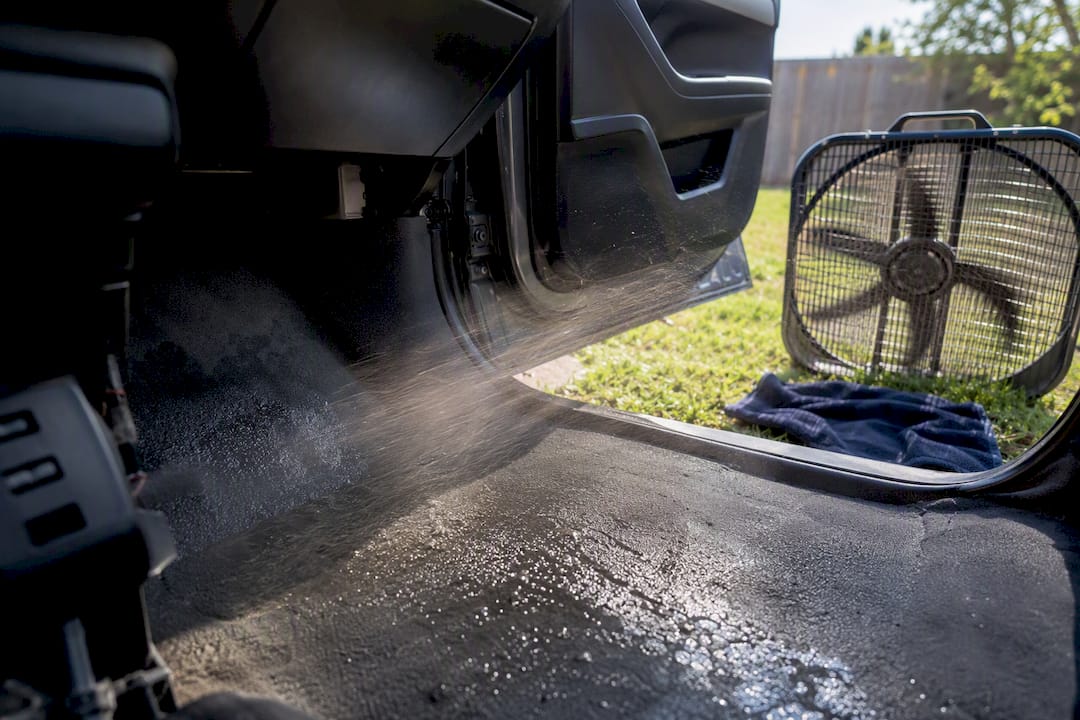
5. Position fans for directional airflow. Set up a fan so air moves across the wet area and out through an open door or window, not just around in circles. If you have access to an actual air mover, pros note it can roughly halve drying time compared to a standard box fan.
6. Add a dehumidifier in enclosed spaces. If you’re drying the car in a closed garage, humidity has nowhere to go and will just resettle into the carpet overnight. A portable dehumidifier pulls that moisture out of the air instead of letting it recycle.
7. Let it run. Plan on 6 to 24 or more hours of continuous airflow depending on saturation level. Check back periodically rather than assuming it’s done because the top layer feels dry.
Along the way, keep two safety notes in mind. First, if water reached anything electronic, seat controls, door speakers, under-dash wiring, unplug the battery before you keep working and get those components checked separately. Second, resist the urge to blast a space heater into the cabin and call it done. Heat without ventilation traps moisture instead of removing it, which sets you up for mold rather than preventing it.
Pro Tip: Keep a small notebook or your phone handy and log start times for each drying stage. It sounds unnecessary until you’re on hour 20 trying to remember when you actually started the fan.
Lifting the Carpet to Dry the Padding Underneath
Surface-dry doesn’t mean actually dry. The tell is a soft, spongy “squish” when you press your foot into the carpet, or a coolness that lingers even after the top feels fine to the touch. Both mean water is still trapped in the padding below, and padding that stays wet is the single biggest reason “dried” cars develop a musty smell weeks later.
To check and dry it yourself:
- Pop the door sill trim or plastic clips along the carpet edge using a trim tool, working gently so you don’t crack the plastic.
- Peel back the carpet enough to create a gap, then prop it open with a rolled towel or a block of wood.
- Aim a small fan directly into that gap so air moves under the carpet, not just over it.
- Leave it propped and running for several extra hours beyond your surface-drying timeline.
If the padding is saturated all the way through, or if getting to it means pulling seats or center console panels, that’s the point to call in a professional rather than improvising. Seats often bolt to airbag sensors and wiring harnesses, and disconnecting the wrong bracket can trigger a warning light or worse.
Before you call it dry, run a quick check: press your palm flat against the padding for a few seconds, or seal a section under a plastic bag overnight and look for condensation the next morning. No fogging, no coolness, no smell, means you’re clear.
How Long Does It Take to Dry a Wet Car Carpet?
Drying time depends almost entirely on how much water got in and how it’s being pulled out. A light spill, coffee, a splash from an open window, usually dries within a few hours with just towels and open windows. Moderate saturation, the kind you get from a flooded floorboard or a leaking sunroof seal, typically takes 24 to 48 hours of active extraction and continuous airflow. Heavy flooding, standing water that soaked the padding and possibly the seat foam, can take several days and often needs professional-grade equipment to fully resolve.
A few conditions stretch that timeline further:
- High ambient humidity, which slows evaporation no matter how many fans you run.
- Cold weather, since cool air holds less moisture and dries more slowly.
- Drying in a closed space without a dehumidifier running alongside the fans.
- Denser or older carpet padding, which holds water longer than thinner foam.
Before you reinstall mats or close up the car for the night, confirm dryness rather than guessing by following the streak-free method for UK owners to clean car glass and interior surfaces. Press-test the padding, check for condensation under a sealed plastic bag left overnight, or use a moisture meter if you have access to one.
Detecting Mold and Knowing When to Call a Pro
A musty smell that won’t go away, even after the carpet looks and feels dry, is usually the first sign something’s still wrong. Visible spotting, dark specks along seams or under the mats, is the next stage, and recurring dampness after you thought the job was finished usually means the padding never fully dried in the first place. If anyone riding in the car starts sneezing or getting itchy eyes for no obvious reason, take that seriously too.
For early-stage issues, isolate the affected section and clean it before doing anything else. A 50/50 mix of vinegar and water applied lightly to a small moldy patch can help knock down spores, but it’s not a substitute for full extraction and drying afterward. Re-vacuum, re-dry, and check again before assuming it’s resolved.
The instinct to mask a musty smell with an air freshener instead of verifying the carpet is actually dry is exactly how a small mold problem turns into a padding replacement job.
Do extract and dry the carpet completely before moving on to cosmetic fixes. Don’t rely on heat alone, and don’t assume a spray-on odor product means the underlying moisture is gone. Call a professional if you spot actual mold colonies, if the interior sat wet longer than 48 to 72 hours, if the smell persists after a full dry and clean cycle, or if anyone in the car develops respiratory symptoms. At that point, DIY methods usually aren’t enough to fully resolve contamination hiding in the padding or seat foam.
Safety Checklist Before You Start Drying
A few precautions prevent a wet-carpet problem from turning into a bigger repair bill.
- Disconnect the battery only if electronics are soaked or you plan to remove seats or work near wiring harnesses.
- Never run a household space heater inside a closed cabin. It builds humidity faster than it removes it.
- Keep the doors or windows cracked whenever you’re using cleaning sprays or vinegar solutions indoors.
- Wear gloves and eye protection if you’re handling areas with visible mold or spraying cleaning solutions.
- If water reached airbags, seat sensors, or under-floor wiring, skip the DIY approach for those components and get a professional inspection.
Why Airflow and Dehumidification Beat Heat-Only Drying
Cranking the heater and shutting the doors feels like it should work faster. It doesn’t, and this is where most DIY dries go wrong.
Heat without ventilation turns a car cabin into a small steam room. The moisture doesn’t leave, it just moves from the carpet into the air, then settles right back into the fabric once things cool down.
That’s why professional practice, guided by industry drying standards like those from the IICRC, focuses on pulling moisture out of the substrate with extraction, then removing airborne humidity with continuous airflow and a dehumidifier rather than baking it out with heat. Air movers placed under a propped carpet edge push dry air directly where it’s needed, and a moisture meter tells you definitively when the job’s finished instead of leaving you guessing based on smell or touch.
Pro Tip: If you’re renting equipment anyway, prioritize the dehumidifier over a second fan. Fans move air around; a dehumidifier actually pulls water out of that air.
A Local Detailer’s Take on Wet Car Interiors
We see this call a lot: a sunroof drain clogged, a window left cracked during a storm, a cooler that tipped over in the back seat. Most cases follow the same pattern, someone tries towels and an open window for a day or two, then calls once the smell won’t quit. By then the padding’s usually still wet even though the carpet looks fine.
A proper mobile visit covers extraction, substrate-level drying, mold remediation if needed, and a final moisture check before we call it done. Cost and time depend on how deep the water got, but most jobs run faster and more thoroughly than a DIY attempt stretched over several days of trial and error.
Get Professional Help Drying Your Car’s Interior
DIY extraction works fine for a spilled drink or a light rain leak. It gets a lot harder once water has soaked the padding, reached the electronics, or been sitting for a couple of days, and that’s exactly where Cdcautodetailing’s mobile service closes the gap a shop vac and a box fan can’t. Instead of hauling your car somewhere and waiting in a shop queue, a technician brings commercial-grade extraction, air movers, and dehumidifiers straight to your driveway.

A typical visit includes full water extraction, substrate drying under the carpet, padding replacement if it’s too far gone to save, and a final moisture check before the job’s called finished. That last step matters more than people expect. It’s the difference between a car that’s actually dry and one that just smells fine for a week before the mold comes back. If you’re dealing with standing water, a lingering musty smell, or a carpet that’s been damp longer than a day or two, request an estimate for mobile detailing and get it handled before it turns into a bigger repair.
Frequently Asked Questions
How long does wet car carpet drying usually take?
Light dampness dries in a few hours with towels and open windows. Moderate saturation needs 24 to 48 hours of active extraction and airflow, and heavy flooding can take several days plus professional drying equipment.
Can I use a regular vacuum instead of a wet/dry shop vac?
No. Household vacuums aren’t sealed for liquid and will damage the motor, or shock you, if you try to pull up standing water with one. A water-rated wet/dry shop vac is the safe option.
Is it safe to use a hair dryer or space heater to speed things up?
Not as a primary method. Heat without ventilation traps moisture inside the cabin instead of removing it, which raises mold risk rather than lowering it. Airflow and dehumidification work faster and safer.
How do I know if the padding under the carpet is still wet?
Press your foot into the carpet and feel for a soft, spongy “squish,” or check for lingering coolness and a musty smell even after the surface feels dry. A plastic-bag condensation test overnight is a reliable check too.
When should I stop trying to DIY and call a professional?
Call a pro if you see visible mold, if the interior has been wet for more than 48 to 72 hours, if electronics or airbag components got soaked, or if the musty smell persists after a full extraction and dry cycle.
Sources
- Dry Car Carpet – wikiHow
- Best Practices for Drying Out a Wet Car – Car Mold Guys
- How to Dry a Wet Car Interior Fast (Without Causing Mold)
- How Do You Clean and Extract Water from Car Carpet After a Spill or Flood? – AutoDetailPedia