
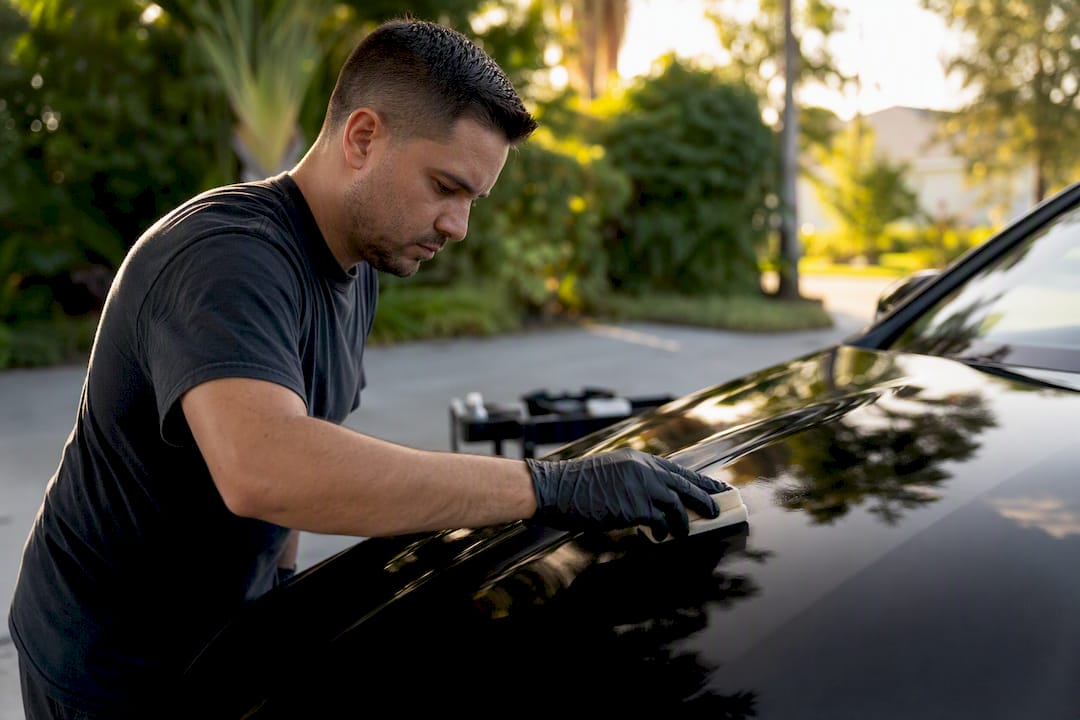
Yes, ceramic coating is worth it on a black car, but only under three conditions: the paint gets properly corrected first, the coating goes on in a controlled environment, and you commit to real maintenance afterward. Skip any one of those and you’re locking swirls under glass instead of protecting the finish. Get all three right and black paint holds a depth of gloss that wax or sealant can’t match.
TL;DR:
- Proper paint correction before application is essential to prevent sealing in swirl marks and scratches under the ceramic coating.
- Coating formulations that enhance gloss depth, swirl-masking, and UV stability are more effective for black paint than just high hardness ratings.
- Maintaining a controlled environment during application and following strict cleaning procedures ensures a flawless, high-gloss finish on black cars.
- Regular maintenance, including gentle washes, decontamination, and preventing bird droppings, is critical to preserve the coating’s appearance on black paint.
- Professional installation that includes correction in a controlled setting produces longer-lasting, better-looking results than DIY kits or rushed applications.
Table of Contents
- Why Ceramic Coating for Black Cars Requires a Different Approach
- What Makes a Ceramic Coating Good for Black Paint
- How Do You Apply Ceramic Coating on Black Paint the Right Way?
- How Do You Maintain a Ceramic-Coated Black Car?
- What Are the Real Limits of Ceramic Coating?
- Why This Guidance Comes From Real Detailing Experience
- The Detailer’s Take on Black Car Coatings
- Get a Professional Ceramic Coating Built for Black Paint
- Sources
Why Ceramic Coating for Black Cars Requires a Different Approach
Black paint doesn’t hide anything. Every swirl mark, every water spot, every trace of oxidation shows up under direct light because there’s no color noise to mask it. A silver car with light swirling looks dusty. A black car with the same swirling looks scratched to the bone, even when the marks are microscopic.
That’s an optics problem, not just a paint quality problem. Dark pigments absorb more light and reflect it back in a narrower band, so any surface irregularity interrupts that reflection and reads as a visible flaw. It’s why professional detailers treat black and other dark colors as their own category rather than an afterthought to a general coating job.
A few environmental stressors hit dark paint harder than lighter colors:
- UV exposure accelerates clear coat breakdown and can accelerate yellowing in lower-quality coatings over time
- Heat buildup on dark surfaces makes panels more prone to flash-curing too fast during application
- Mineral deposits from hard water etch into the surface and stand out sharply against a black background
This is also why “hardness” numbers on a bottle mean less than people think. A coating rated 9H or 10H on the pencil hardness scale tells you about scratch resistance in a lab test, not about how well it hides existing imperfections or how deep the gloss looks in real sunlight. For black and other dark colors, the coatings worth buying prioritize gloss depth, swirl-masking, and UV stability over a hardness figure printed on packaging.
What Makes a Ceramic Coating Good for Black Paint
Not every ceramic coating performs the same way on dark paint, even when the marketing language sounds identical. A few features separate the coatings worth paying for from the ones that just add a slippery layer on top of existing flaws.
- Gloss depth and optical clarity. The best coatings for black cars produce a “wet look” that appears three-dimensional rather than flat and glassy. That comes from resin formulation, not just SiO2 percentage.
- Swirl-masking behavior. Some coatings fill in microscopic surface irregularities just enough to soften their visibility. This isn’t a substitute for correction, but it helps on paint that’s already in decent shape.
- Hydrophobicity. Strong water-beading behavior reduces mineral etching and water-spot formation, which matters more on black paint because spots show up almost immediately after they dry.
- UV stability and anti-yellowing chemistry. Cheaper coatings can develop a slight amber cast over a year or two, a problem that’s nearly invisible on white paint and glaring on black.
- Multi-layer systems. A base coat plus a top coat adds thickness and self-leveling, giving better defect-filling and a more durable gloss on dark colors that show wear faster than light ones.
If you’re comparing options before booking a professional install, CDC Auto Detailing’s ceramic coating guide breaks down which formulations hold up best on dark finishes over multiple seasons.
How Do You Apply Ceramic Coating on Black Paint the Right Way?
Correction comes before coating, every time. A ceramic coating bonds to whatever surface you give it, so any swirl, scratch, or oxidation spot still sitting there gets sealed under a hard, glossy layer that’s far harder to fix later. On black paint specifically, skipping paint correction just seals every visible defect permanently under the clear layer, and no amount of coating quality changes that outcome.
Here’s the sequence that avoids streaking and high spots:
- Strip old wax or sealant, then wash the car with a dedicated prep shampoo.
- Remove bonded iron contamination and clay-bar the surface to pull embedded grit.
- Correct the paint with compound and polish stages until swirls and light scratches are gone.
- Wipe each panel with isopropyl alcohol solution right before coating to remove oils.
- Apply the coating in roughly 2×2 foot sections using a crosshatch pattern for even coverage.
- Watch the flash window, typically 30 to 90 seconds depending on temperature, then wipe with one clean microfiber and buff with a second.
- Inspect each panel under angled side lighting before moving to the next one.
Temperature and humidity aren’t optional details. Aim for 60 to 75°F with humidity under 60%, out of direct sun, with bright side lighting to catch high spots as you go. A hot panel flashes too fast and leaves streaks before you can level it; high humidity can interfere with cure chemistry entirely.
Pro Tip: If you spot a high spot within the first hour, a light re-wipe with a coating-approved leveling solution usually fixes it. After full cure, you’re stuck polishing it out or using a dedicated coating remover, so catch it early or call a professional before it sets.
For a full walkthrough with photos, CDC’s step-by-step application guide covers the same sequence in more detail.
How Do You Maintain a Ceramic-Coated Black Car?
Maintenance is where most owners either protect their investment or slowly undo it. A coating reduces how often dirt bonds to the paint, but it doesn’t eliminate washing, and black paint punishes neglect faster than any other color.
- Wash weekly to biweekly depending on how much the car sits outside versus in a garage.
- Use the two-bucket method with a pH-neutral shampoo to avoid stripping the coating’s hydrophobic layer.
- Apply an SiO2 booster spray roughly every six months to refresh slickness and gloss between full coating cycles.
- Schedule a decontamination pass, clay or iron remover, every 6 to 12 months to pull embedded contaminants the coating can’t repel on its own.
- Skip automatic touchless or brush car washes; brushes introduce fine swirls that show up instantly on black.
- Rinse and dry with a proper drying towel rather than air-drying, which invites hard-water spotting.
- Remove bird droppings and sap immediately. Both are acidic and can etch through a coating’s protective layer within hours if left in the sun.
A pH-neutral shampoo formulated for coated finishes is worth keeping in your wash kit specifically because harsher soaps degrade hydrophobicity faster than they should.
What Are the Real Limits of Ceramic Coating?
A ceramic coating is a chemical bond to your clear coat, not armor. It will not stop rock chips, deep scratches, or dents, and anyone who tells you otherwise is selling something. If impact protection is the goal, you’re looking at paint protection film, not a coating.
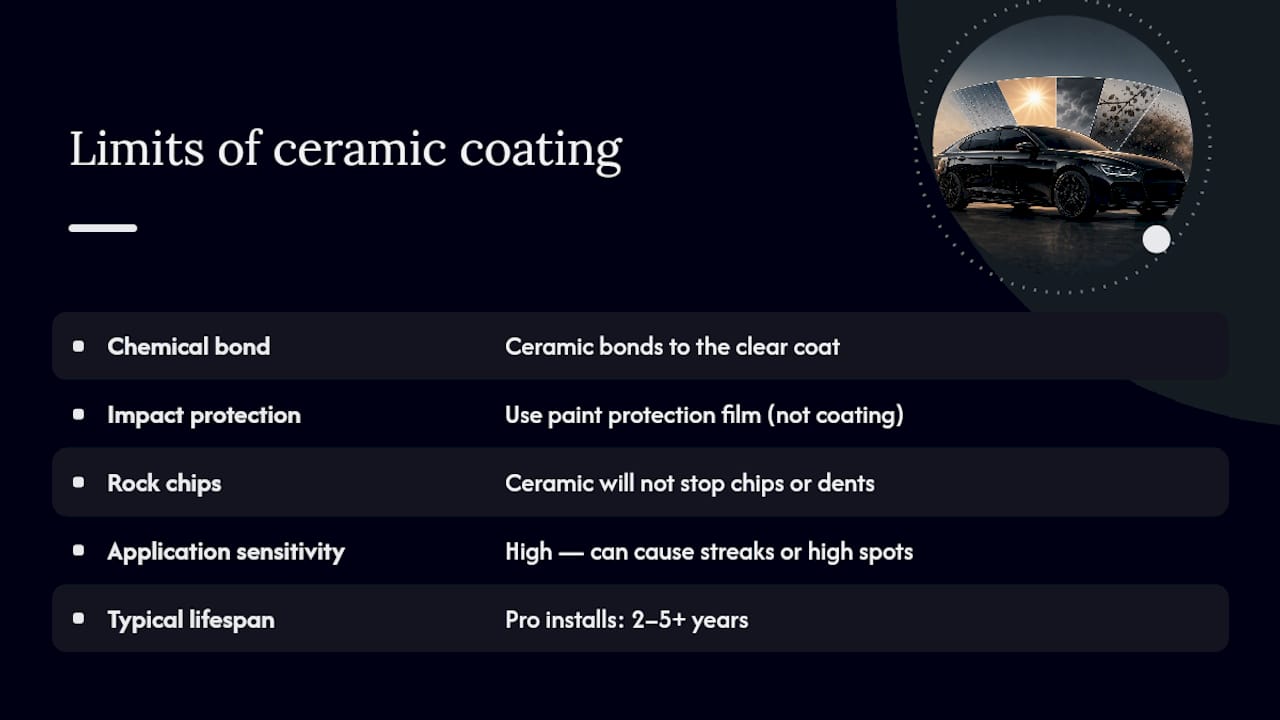
Application sensitivity is the other honest downside. Rushing the process, coating in direct sun, or reusing the same microfiber for wipe and buff steps are documented causes of streaking and permanent high spots. Once cured, those mistakes are difficult and sometimes impossible to fully remove.
Cost varies mostly by how much correction the paint needs going in. A DIY kit runs far cheaper upfront, but a swirl-covered black car needs hours of correction work before that kit does any good. Professional installs typically run 2 to 5+ years depending on product tier and how well the owner maintains it, which usually justifies the higher install cost for anyone keeping the car long term.
Why This Guidance Comes From Real Detailing Experience
CDC Auto Detailing works on dark-colored vehicles across South Jersey regularly, applying professional-grade ceramic coatings after full paint correction in a controlled bay environment rather than in a driveway at the mercy of weather. That combination, correction plus environment plus product, is where the outcome actually gets decided.
This guide was written by Charles, a detailer with hands-on experience coating dark and black finishes. For the full breakdown of what a professional install includes, CDC’s ceramic coating process guide walks through correction tiers and booking details.
The Detailer’s Take on Black Car Coatings
The conventional advice treats ceramic coating like a single product decision: pick a bottle, apply it, done. That’s backward. The coating matters less than what happens before it goes on. I’ve seen owners spend real money on a premium coating only to seal in swirls that were visible from ten feet away, because nobody corrected the paint first.
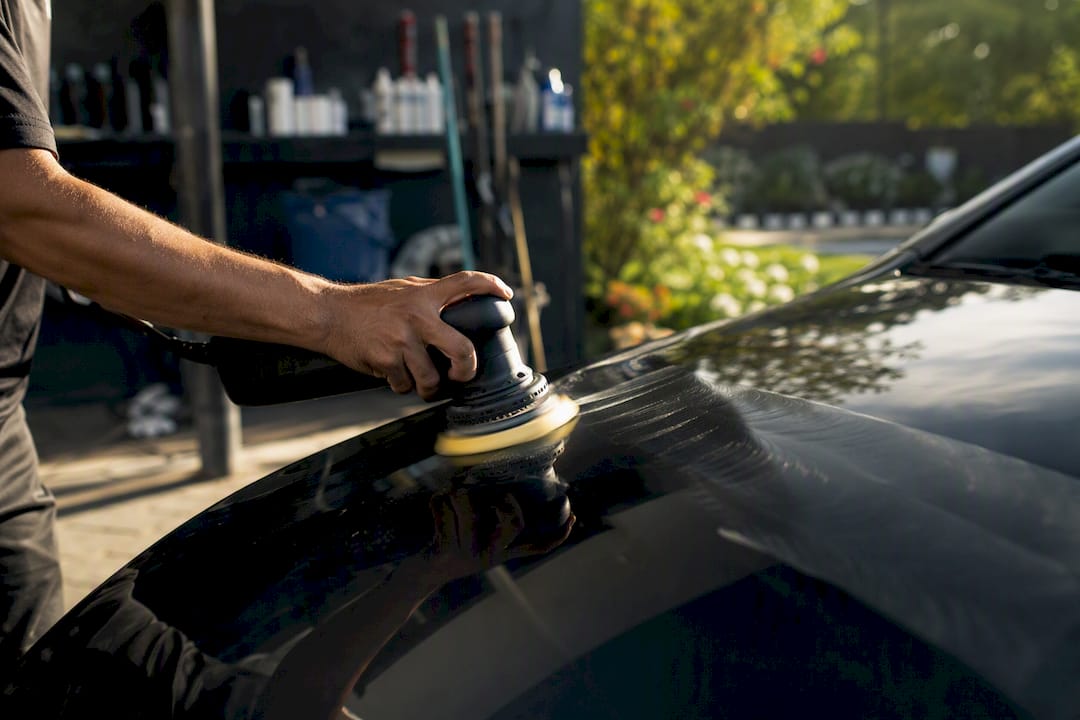
What’s overrated is the hardness rating on the label. What’s underrated is environmental control during application, the difference between a garage bay held at a steady temperature and a driveway job fighting sun and humidity swings is the difference between a flawless panel and one with visible high spots six months later.
If you take one thing from this: prioritize the installer’s prep process over the coating brand name. A mediocre coating applied after real correction in a controlled space will outperform a premium coating rushed onto uncorrected paint every time. That’s not a popular opinion in DIY forums, but it’s the one the actual failure patterns support.
— Charles
Get a Professional Ceramic Coating Built for Black Paint
CDC Auto Detailing is the alternative to a DIY kit and a hope-it-works weekend project. Every ceramic coating job starts with a real paint assessment, moves through correction tiers matched to your car’s condition, and finishes with a professional-grade coating applied in a controlled setting instead of a driveway fighting sunlight and humidity.

You don’t need a garage or special equipment. CDC’s mobile setup handles the prep and application on-site, and most jobs are scheduled around a clear timeline so you know exactly when your car is back in rotation. Aftercare packages keep the gloss and hydrophobic performance intact well past the first wash. If your black paint has swirls you’re tired of seeing under every parking lot light, book a ceramic coating assessment and find out what correction and a controlled install actually look like on your car.
Sources
For deeper detail on prep work before coating, see CDC’s ceramic coating prep wash guide. For durability comparisons across coating tiers, the 2026 benefits guide covers longer-term maintenance data.
- What can go wrong with ceramic coatings — how to avoid it
- The Best Ceramic Coatings for Dark Colored Cars: What to Look For
- How to Apply Ceramic Coating Without Streaks or High Spots
- How to apply ceramic coating (Chemical Guys)